Roster Analysis: New Hampshire WLAX
New Hampshire enters 2027 with a roster that reflects the reality of being a program still searching for its footing in Division I lacrosse. The Wildcats struggled across the board last season, with an offense ranked in the 20th percentile nationally, a defense in the 14th percentile, and a draw-control unit that finished in the 7th percentile. Those numbers paint a picture of a team that has work to do, but the returning core offers some reasons for cautious optimism that incremental progress could be on the horizon.
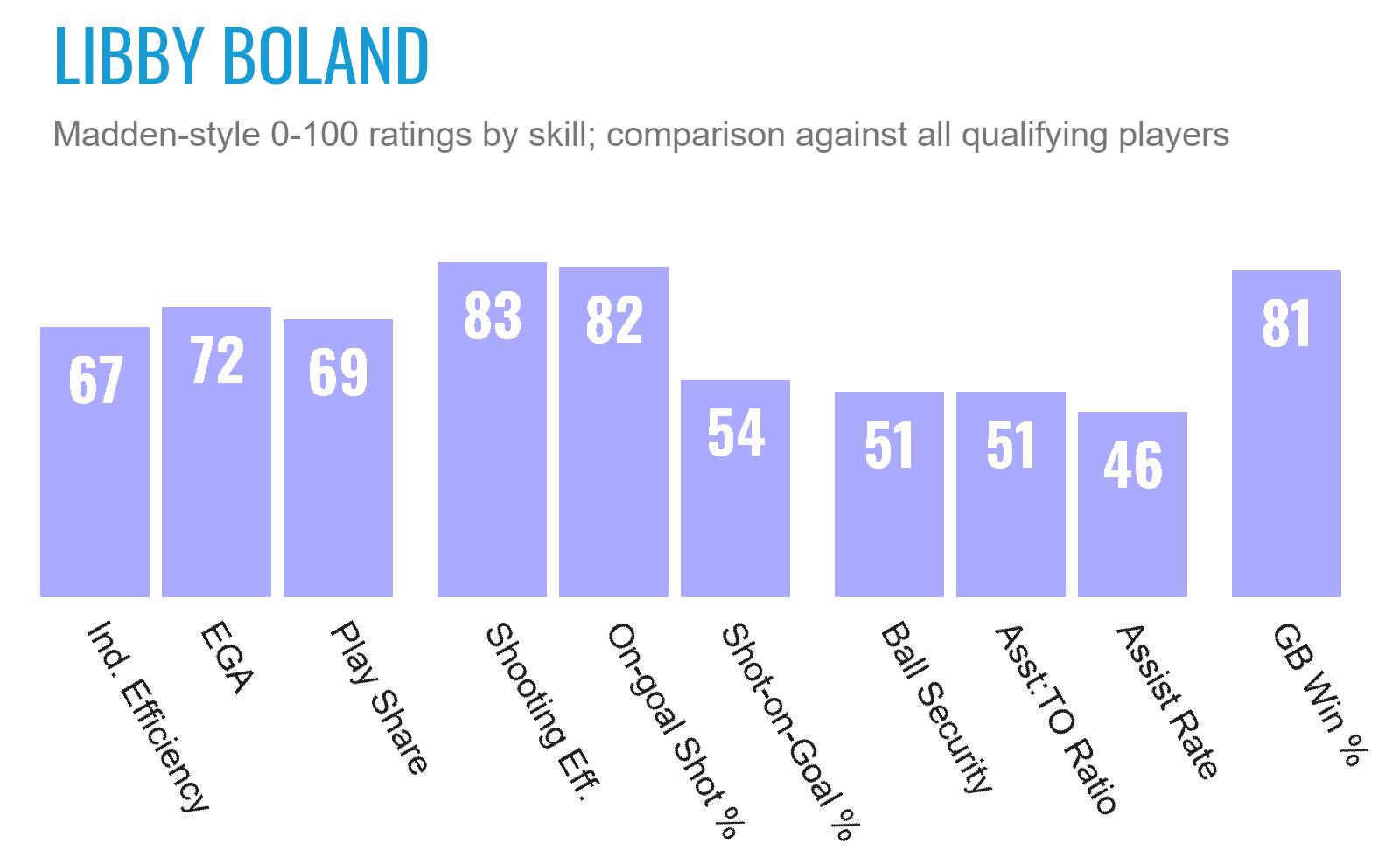
The most significant departure New Hampshire must address is Rose Pavuk, who accounted for 27% of the team’s shots last season. Losing that kind of volume from a single player forces an offense to reconfigure. That said, Pavuk’s individual efficiency rating sat in the 45th percentile, which opens a door for the Wildcats to potentially improve if they can redistribute those opportunities to more efficient finishers. Libby Boland looks like the most obvious candidate to step into a larger role. She finished last year in the 67th percentile for total production and posted an individual efficiency rating of 67, well above Pavuk’s marks. Boland already handled 15% of the team’s shots and contributed over 10% of their assists, so she has experience as a focal point of the attack. Whether she can handle an even bigger workload while maintaining that efficiency will be one of the central questions for this offense.
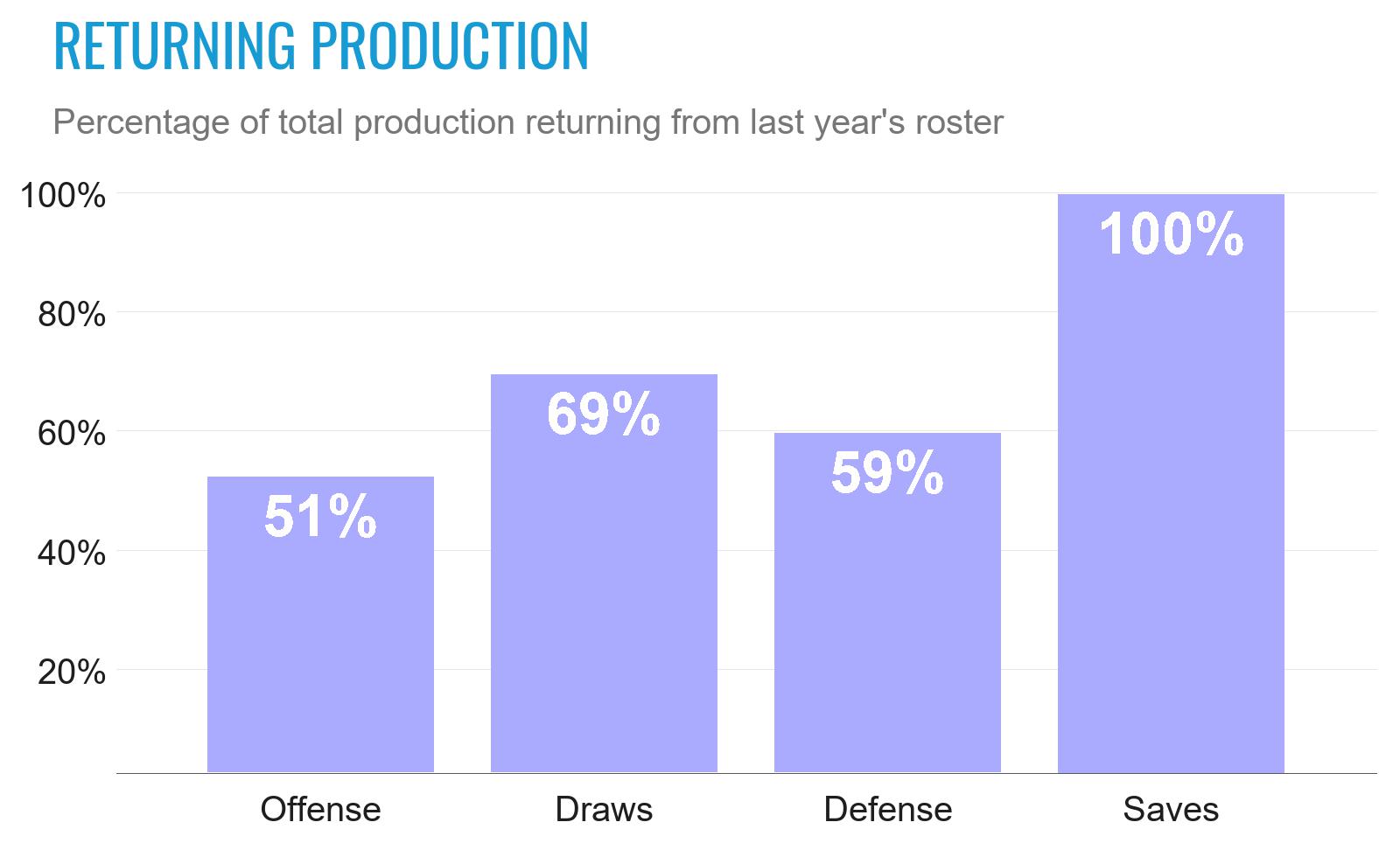
New Hampshire didn’t add any defenders through the transfer portal, so the back line will lean on player development and the incoming freshmen. The Wildcats bring back 59% of last year’s defensive experience (by games played), which still leaves a pretty green group in front of the cage. For a defense that ranked in the 14th percentile nationally, just running it back may not move the needle, and without veteran transfers to add fresh ideas or proven ability, any improvement will have to come from within.
The overall roster does carry some veteran presence. Looking at the top ten players by career games played, the median rotation player has appeared in 29 career games, and four players have logged at least 30 career appearances. That kind of experience should help with cohesion and decision-making, even if the talent level remains a work in progress.
In goal, New Hampshire is in a relatively stable position. The Wildcats return 100% of their saves from last season, with Emma Crater having made 114 saves at a 43% clip and Makenna Schultz adding 40 saves at 33%. With no experienced transfers coming in at the position, Crater figures to get first crack at the starting job. The challenge for her and whomever backs her up will be operating behind a defense that lost a good chunk of its experience. Continuity in net is generally a positive, but when the overall defensive unit struggled as much as New Hampshire’s did, the goalkeepers will need the players in front of them to take a step forward if the save percentages are going to improve.
The draw circle remains a concern. New Hampshire lost Julia Gronda, who ranked in the 85th percentile for draw-control-related production with 27 wins and 5.7 fEGA. The primary specialist, Charlize Collins, does return after posting numbers in the 90th percentile with 38 draw-control wins, and Erin Fagan adds depth at the 87th percentile with 31 wins. The question is whether Collins and Fagan can handle an increased workload or whether the Wildcats need to develop another option. Given that the unit ranked in the 7th percentile last year despite having that talent, the issue may be less about individual ability and more about situational execution and support.
Putting it all together, this roster suggests New Hampshire is still in building mode, but there are pieces in place that could lead to modest improvement. The experience in goal and at the draw, combined with a chance for more efficient shot distribution on offense, offers some pathways to progress. Whether the Wildcats can actually take a step forward will depend largely on how the young and inexperienced defenders develop and whether the returning core can elevate their games.
Expected Goals Newsletter
This was originally published in our daily newsletter, Expected Goals, on Oct 17th. If you want to get more coverage and analysis like this, straight in your inbox every morning, sign up here. It’s free and over 1,300 other lacrosse folks have signed up.
More from the Expected Goals Newsletter
-
Roster Analysis: Towson: Towson lost 55% of its offensive production—but one departure could leave room for improvement.
-
Roster Analysis: Holy Cross: Holy Cross returns just 3% of last season’s saves. Its two remaining goalkeepers faced eight shots between them.
-
Roster Analysis: Brown: Brown returns 92% of its points—but that figure makes the offense look more intact than it is.
-
Roster Analysis: Wofford: Wofford’s roster grew by one, yet only 41% of its draw-control experience returns. Who takes over at the circle?
-
Roster Analysis: Austin Peay: Austin Peay returns 90% of its defensive experience—but from a unit that ranked in the bottom 4% nationally. What changes if the players don’t?
-
Roster Analysis: Robert Morris: Robert Morris returns 87% of its offensive production. So why might one departure help the offense improve?
-
Roster Analysis: Stony Brook: Stony Brook returns 89% of its offense, but its hardest loss can’t be measured on defense alone.
-
Roster Analysis: Iona: Iona returns most of its defense—but just 2% of last season’s saves. How much can continuity help when the goalkeeper is a question mark?
P.S. What did I miss? Data-centric analyses like this can miss things that don’t show up in the stats (i.e. injuries/coaching changes). If you can help explain any of the above, put it in the comments.


