Roster Analysis: Lenoir-Rhyne MLAX
Lenoir-Rhyne enters the 2027 season with one of the more experienced rosters you’ll find at this level. The median rotation player has appeared in 34 career games, and a full 10 players have logged at least 30 games of collegiate experience. With 16 seniors and grad students on the roster compared to just 13 players who’ve never seen the field, this is a group that knows what it takes to compete. That kind of continuity typically translates to consistency, which should help as the Bears navigate some significant personnel changes elsewhere.
The offensive outlook, however, is where things get complicated. Last season, Lenoir-Rhyne posted an adjusted offensive efficiency of 39.4%, good for third nationally. The projection for 2027 drops that figure to 33.4%—a decline of nearly six percentage points that would have slotted them around 15th in the country last year. That’s a substantial step backward on paper. The Bears return 61% of their offensive production from a unit that finished in the 97th percentile for opponent-adjusted efficiency, but the departures sting. Donovan Powell accounted for 18% of their offensive EGA and 19% of their assists, serving as a primary initiator with an individual efficiency rating in the 83rd percentile. Jarrett Huff’s departure costs them another 12% of offensive production. Owen Scott, who took 11% of the team’s shots and posted an individual efficiency rating in the 79th percentile with per-game production in the 90th percentile, figures to carry more of the load. Eli Busse, who contributed 8% of the assists last season and posted efficiency in the 77th percentile, should also see an expanded role. But replacing Powell’s ability to create for others won’t be simple.
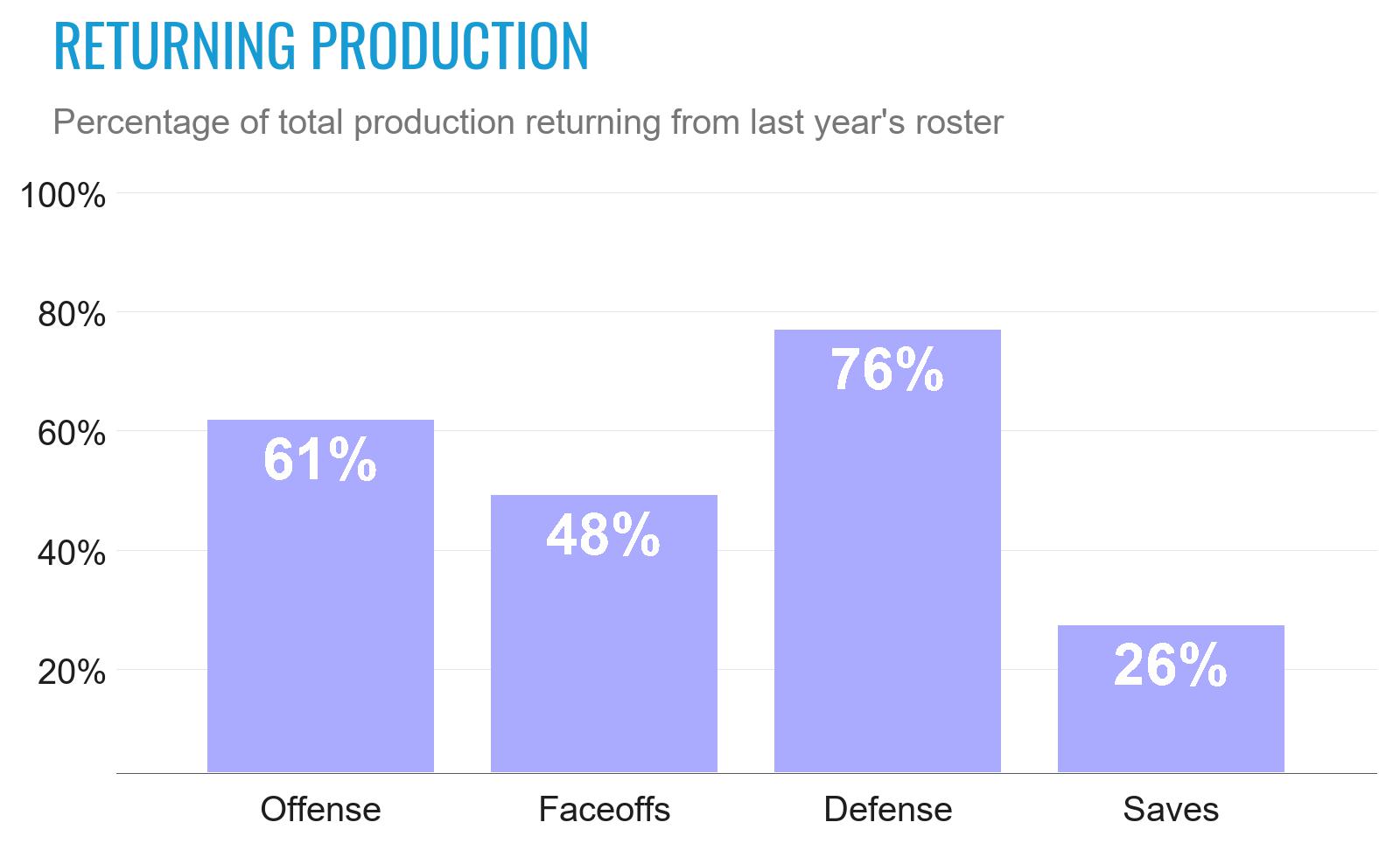
The faceoff unit faces an even steeper challenge. Lenoir-Rhyne returns just 48% of their faceoff experience from a group that finished in the 93rd percentile nationally for opponent-adjusted win rate. The biggest hole is Matthew Mancini, who took 309 faceoffs at a 65% clip and ranked as the eighth-best faceoff specialist in the country by Elo rating. He finishes his career in the top percentile for faceoff wins with 763 total. That’s an enormous void. Oran Lautenbach, who took 107 faceoffs last season at a 64.5% win rate and ranked 24th nationally, seems like the logical candidate to step into a larger role. Will Cochran is another name to watch—he took just 51 faceoffs but converted at a 76.5% rate and ranked 30th by Elo. Whether either can replicate Mancini’s volume and consistency remains to be seen.
The goalie situation adds another layer of uncertainty. Owen Peters, who made 87 saves at a 55% clip, is gone. The most experienced returning option is Gavin Stabile, who made 28 saves last year but posted just a 42% save percentage. Freshman Trey Lalonde joins the mix, and Zachary von Garrel rounds out the room. With no experienced transfer keepers coming in, Stabile may get the first opportunity, but whoever wins the job will be working behind a defense that should provide some stability. The Bears return 76% of their defensive contributions as measured by games played, and the unit finished last season in the 81st percentile. An experienced back line gives the new starter some margin for error, but there’s no getting around the fact that the goalie position is a question mark for a program accustomed to certainty.
Taken together, this roster presents an interesting tension. The experience is there, and the defensive foundation remains largely intact. But the projected offensive regression, the loss of an elite faceoff specialist, and the uncertainty in goal mean Lenoir-Rhyne will need some things to break right to match last year’s results. The pieces exist for the Bears to compete at a high level, but how quickly the new faces in key roles can produce at the standard this program expects will determine whether this season represents a step back or a reload.
Expected Goals Newsletter
This was originally published in our daily newsletter, Expected Goals, on Oct 13th. If you want to get more coverage and analysis like this, straight in your inbox every morning, sign up here. It’s free and over 1,300 other lacrosse folks have signed up.
More from the Expected Goals Newsletter
-
Roster Analysis: Felician: Felician returns just 5% of its faceoff experience. On a 21-player roster, that’s only one of the gaps it needs to fill.
-
Roster Analysis: Rollins: Rollins returns every save from last season. So why have only five players on the roster appeared in 30 career games?
-
Roster Analysis: UIndy: UIndy returns most of a 95th-percentile defense—but just 21 saves in goal.
-
Roster Analysis: Coker: Coker held its own at the faceoff dot last year. With just 5% of that experience returning, who takes the next draw?
-
Roster Analysis: William Jewell: William Jewell returns 100% of its offensive production. So what could hold the Cardinals back?
-
Roster Analysis: Tampa: Tampa lost the nation’s No. 2 faceoff specialist. His likely successor ranked No. 6—but has yet to carry the same workload.
P.S. What did I miss? Data-centric analyses like this can miss things that don’t show up in the stats (i.e. injuries/coaching changes). If you can help explain any of the above, put it in the comments.


