Roster Analysis: Utah MLAX
Utah’s 2026 roster looks like a “run-it-back with some tweaks” group rather than a full reset. The Utes are coming off a season where they were pretty middle-of-the-pack on both sides of the ball: offense in the 55th percentile nationally, defense also in the 55th percentile, and a faceoff unit in the 69th percentile. With 49 players listed this year (down just one from last season’s 50), this is a slightly lean but essentially average-sized roster built more on continuity than overhaul. The big-picture question is whether that continuity is enough to nudge Utah back toward the stronger seasons they’ve had in the recent past, or if they just hold steady as a solid but unspectacular outfit.
Starting at the stripe, Utah is in as stable a position as you could reasonably hope for. The Utes return 96% of their faceoff experience, which means almost everyone who took draws last year is back. That includes Tyler Kloeckl, who handled 239 faceoffs and posted a 56.1% win rate. By the numbers, he graded out as the 26th-best faceoff specialist in the country, and the unit as a whole landed in the 69th percentile on opponent-adjusted win rate. That’s not a group that was tilting the field every game, but it was clearly on the right side of “solid.” With that much experience returning, the faceoff unit is one of the safer bets on this roster to at least match last year’s level, and there’s a reasonable path to a small step forward if Kloeckl can turn a few more of those 50/50 draws into wins.
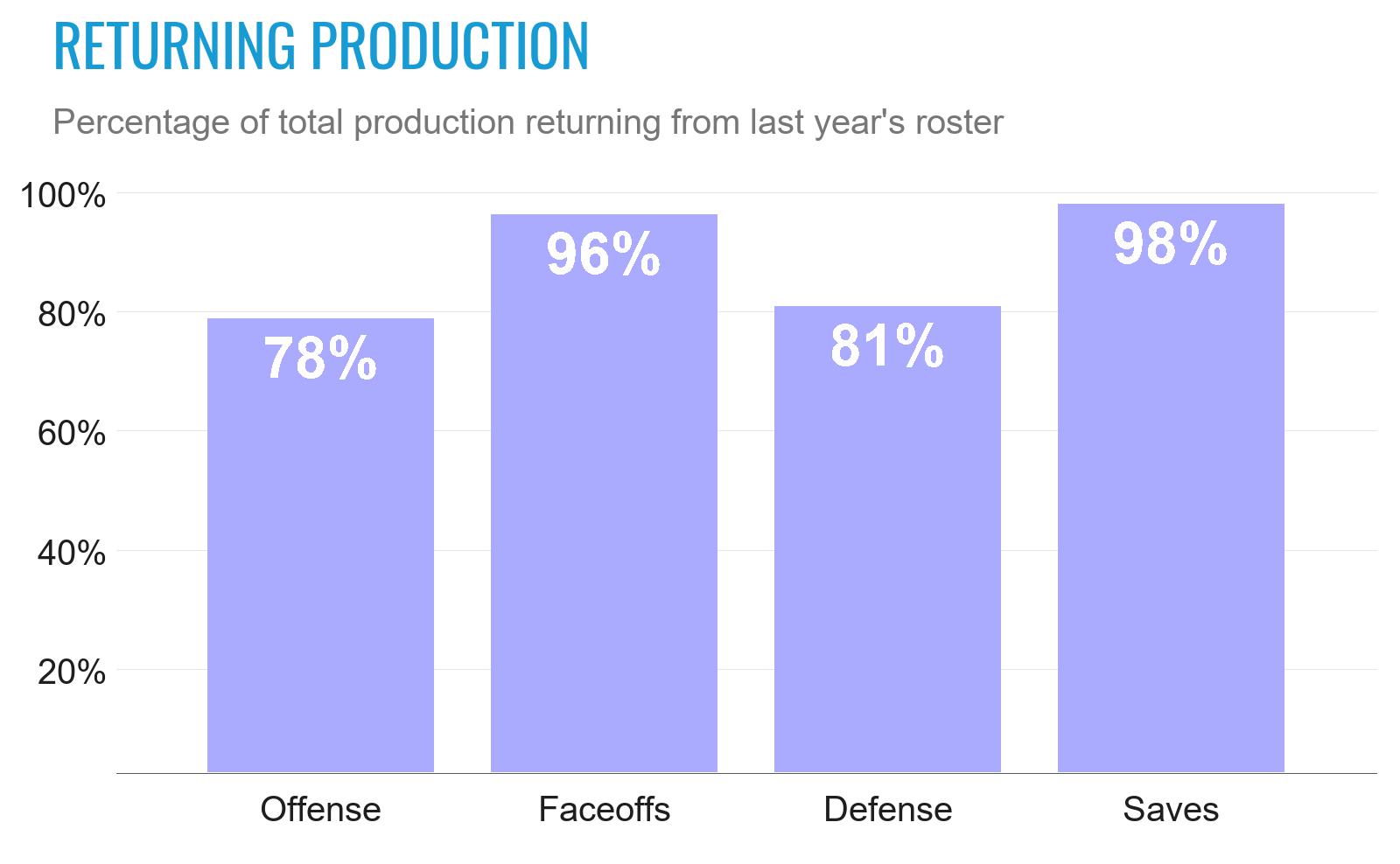
Defensively, the story is similar: more continuity than turnover, which is usually what you want on that side of the ball. Utah brings back 81% of its defensive experience, measured by games played, meaning they’ve lost 19% of last year’s minutes but kept the core intact. Last year’s defense finished in the 55th percentile nationally—very much in the “good enough to win with if the rest of the operation is humming” category. The key piece here is that Colin Lenskold is back in net. He appeared in 15 games, faced 341 shots, and posted a 50% save percentage, which slotted Utah’s goalie play in the 42nd percentile. That’s serviceable, but not a strength. With that kind of volume—341 shots faced in his career to this point—he’s not an unknown; you more or less know what you’re getting. If Lenskold can nudge that save rate up a few points, the combination of returning defenders and a slightly improved goalie could turn a merely adequate defense into one that actually helps Utah win the margins in tighter games. Behind him, Matthew Dineen is on the roster but still an unknown quantity, so any major jump is more likely to come from incremental improvement by the established group rather than a surprise breakout in the crease.
Roster size-wise, Utah is in a pretty normal spot. With 49 players this season compared to 50 last year, they’re just a touch smaller than average but not in a way that should change how they operate. It’s enough bodies to roll specialty units, keep legs fresh, and develop depth, but not so many that it becomes hard to find roles. For a program trying to rebound from a disappointing year, having roughly the same-sized roster with this much returning experience suggests they’re betting more on internal growth than on sheer numbers or a massive influx of new faces.
Offensively, Utah also brings back a solid majority of what they had, returning 78% of last year’s production and losing 22%. The biggest departure is Chase Robertson, who accounted for 9% of Utah’s assists and 10% of the total offensive EGA last season. His individual efficiency was in the 74th percentile, so he wasn’t just a volume guy; he was a fairly efficient initiator. How Utah replaces that 10% slice of offensive EGA will go a long way in determining whether the offense moves up from its 55th-percentile standing. They also need to replace Cody Hart’s 6% share of offensive production, which is not insignificant.
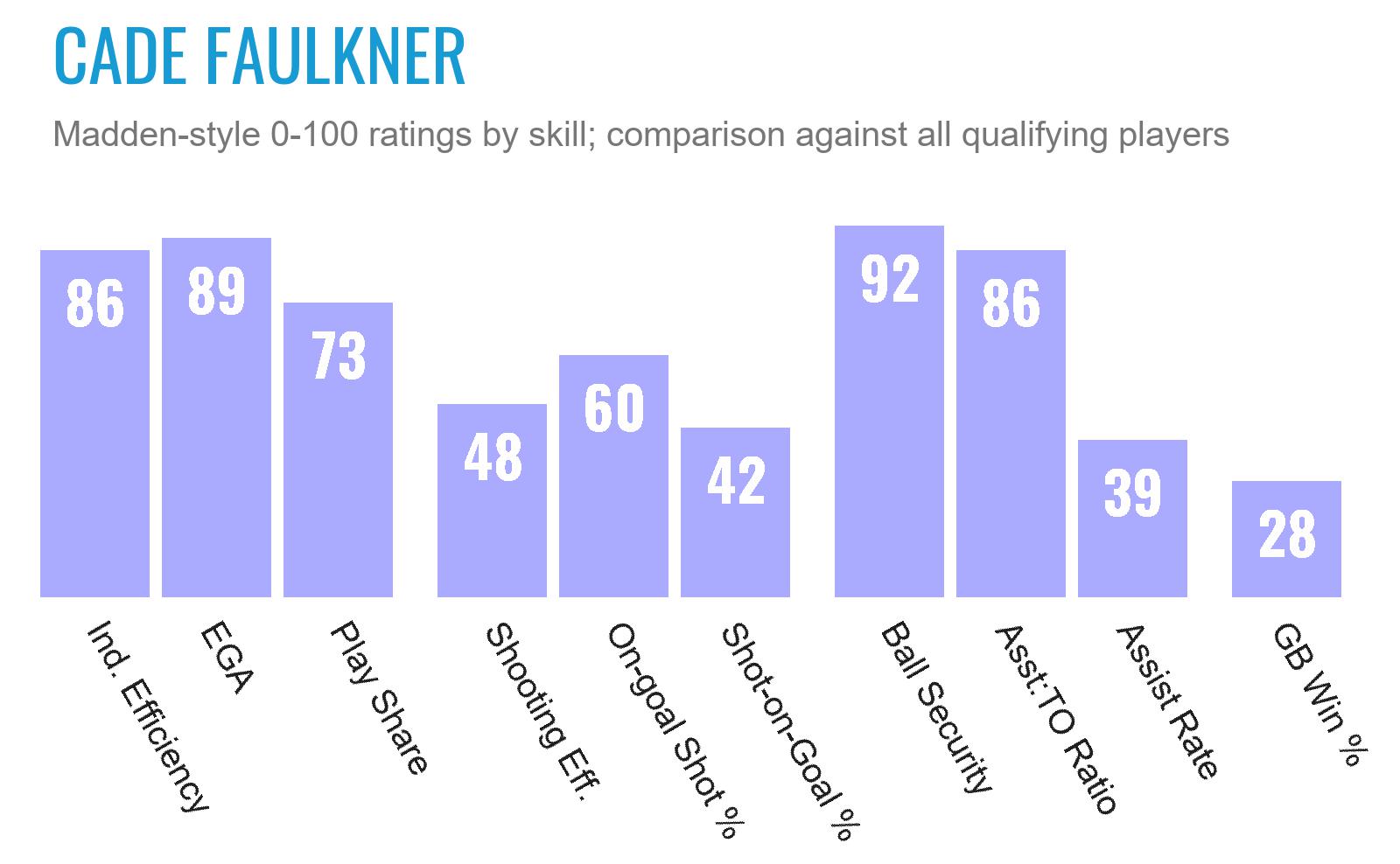
The good news is that the top-end pieces are still in place. Ryan Stines returns as the primary initiator, responsible for 39% of Utah’s assists last year. His production on a per-game basis was in the 94th percentile nationally, so in terms of carrying an offense, he’s already operating at a very high level. His individual efficiency was in the 61st percentile—above average but with room to tighten things up. If he can maintain that 94th-percentile usage and nudge the efficiency up even slightly, he can more than cover some of the lost playmaking. Around him, Cade Faulkner gives Utah a high-end finisher: he took 15% of the team’s shots, posted an individual efficiency in the 86th percentile, and had per-game production in the 89th percentile. That’s exactly the kind of profile you want for a primary shooter—high volume and high efficiency. Luke McNamara adds a two-way impact piece; he grabbed 4% of the team’s total ground balls while taking 12% of the shots, with individual efficiency in the 77th percentile and per-game production in the 82nd percentile. Those numbers say he’s not just eating possessions—he’s turning them into positive plays at a strong clip and helping Utah win the ball back.
Putting it all together, this roster should be better than last year’s record suggests, mostly because so much proven production is back: 96% of faceoff experience, 81% of defensive experience, 78% of offensive production, plus a starting goalie who’s already faced 341 shots. On the flip side, they’re starting from a solid-but-not-special place in most areas, and the roster doesn’t scream big upside unless efficiency ticks up, especially on offense and in the cage. If a few returners get a little sharper and one or two new faces help cover the Robertson/Hart gap without a big drop in efficiency, Utah has a real shot to move back toward the level of those stronger seasons they’ve gotten used to. If not, they still look like a solid, competitive group, probably living in that same middle lane for another year.
Expected Goals Newsletter
This was originally published in our daily newsletter, Expected Goals, on Dec 31st. If you want to get more coverage and analysis like this, straight in your inbox every morning, sign up here. It’s free and over 1,300 other lacrosse folks have signed up.
More from the Expected Goals Newsletter
-
Roster Analysis: Dartmouth: With more true newcomers than seniors, Dartmouth enters 2026 betting on upside over experience
-
Rising Star: Hill Plunkett: Last season, Plunkett made others better; the next step hinges on turning all those touches into cleaner shooting
-
Schedule Preview: Richmond: Richmond’s non-AQ at-large odds ride on a web of results far beyond the teams on their schedule
-
Rising Star: Zac Amend: The comps show a clear fork: stay a good finisher, or grow into the kind of feeder who changes an offense
-
Roster Analysis: Navy: Navy’s defense is set, but 2026 hinges on who replaces Tolker and Ash on the scoring end
P.S. What did I miss? Data-centric analyses like this can miss things that don’t show up in the stats (i.e. injuries/coaching changes). If you can help explain any of the above, put it in the comments.


